
Updated: October 2026 | By Marko Kuburovic, Kubura Siding
Fall and winter eavestrough maintenance helps keep rain, melting snow and roof runoff moving away from a home before Toronto's colder weather arrives. A practical fall check should include removing leaves and debris, confirming that downspouts drain properly, looking for leaks or sagging sections, inspecting the surrounding fascia, and deciding whether damaged components need repair, replacement or additional gutter protection.
Executive Summary
For Toronto and GTA homeowners, the best time to inspect an eavestrough system is before leaves, freezing temperatures and winter precipitation make existing drainage problems harder to address. Start by checking for debris, blocked downspouts, overflowing sections, loose fasteners, leaking joints and areas where water is not being directed safely away from the home.
Cleaning may be enough when the system is otherwise sound. Localized damage may be repairable, while widespread deterioration, persistent leaks, poor drainage or failing sections can justify replacement. Gutter guards can reduce the amount of debris entering an eavestrough, but the right solution depends on the existing gutter system and roof conditions.
This 2026 guide combines practical seasonal maintenance advice with first-hand project experience from Kubura Siding, an exterior contractor serving Toronto and the GTA.
Key Takeaways
- Inspect before winter: Fall is an important time to identify blocked, leaking, sagging or damaged eavestroughs before freezing conditions arrive.
- Keep water moving: Eavestroughs and downspouts should move roof runoff away from the home without overflowing or backing up.
- Cleaning and repair are different: Debris may simply require cleaning, while leaks, loose sections, poor slope or physical damage may require professional repair.
- Replacement is not always necessary: The condition and extent of the problem should determine whether a localized repair or a full gutter and downspout replacement makes sense.
- Gutter guards are not one-size-fits-all: Roof pitch, shingle overhang, water flow and the existing eavestrough system can affect which gutter-protection approach is appropriate.
- Look beyond the gutter: If an eavestrough is pulling away from the roofline, the surrounding fascia should also be inspected for deterioration or damage.
Fall & Winter Eavestrough Maintenance: Quick Guide
| What to Check | What You May Notice | Possible Next Step |
|---|---|---|
| Leaves & debris | Slow drainage, standing water or overflow | Clean the eavestrough and test water flow |
| Downspouts | Water backing up or failing to drain away | Check for blockage and confirm discharge |
| Joints & corners | Drips or visible leakage | Assess whether the affected area can be repaired |
| Gutter alignment | Sagging sections or standing water | Inspect slope, fasteners and overall condition |
| Fascia & roofline | Gutter pulling away or deteriorated material | Inspect both the eavestrough and fascia |
| Recurring debris | Frequent clogging or repeated cleaning | Evaluate whether gutter protection is suitable |
| Widespread deterioration | Multiple leaks, damaged sections or poor performance | Compare repair with full replacement |
Why Fall & Winter Eavestrough Maintenance Matters in Toronto
An eavestrough system has a simple job: collect water from the roof and move it through the downspouts to a safe discharge point. Problems begin when leaves restrict that flow, a downspout becomes blocked, a section starts leaking or sagging, or the gutter can no longer drain properly.
Fall is a useful time for Toronto homeowners to identify these problems because the system can be checked before colder temperatures make maintenance and repairs more difficult. A problem that appears minor during dry weather can become more noticeable when the eavestrough has to manage fall rain, melting snow and repeated freeze-thaw conditions.
Quick Answer: How Should You Prepare Eavestroughs for Winter?
Before winter, remove accumulated leaves and debris, make sure downspouts are clear, check that water drains without overflowing, inspect joints and corners for leaks, look for sagging or loose sections, and examine the fascia where the eavestrough is attached. If problems are found, decide whether the system needs cleaning, localized repair, gutter protection or replacement before winter conditions arrive.
1. Clear Leaves and Debris Before Winter
Leaves, small branches and other debris can accumulate inside an open eavestrough during fall. As material builds up, it can restrict the path that rainwater and melting snow use to reach the downspout.
Homeowners should pay particular attention to sections below nearby trees, inside corners and the area around downspout outlets. After debris is removed, the system should be checked for standing water and tested to confirm that water can move toward the downspouts.
Signs an Eavestrough May Be Clogged
- Water spilling over the edge during rainfall
- Standing water remaining in the gutter
- Visible leaves or debris around the downspout opening
- Water draining slowly through the system
- Water appearing where two gutter sections or corners meet
2. Check the Downspouts and Where the Water Goes
Cleaning the horizontal eavestrough is only part of the job. Water also needs an unobstructed route through the downspout and away from the home.
During a fall inspection, check the downspout opening for debris and look for obvious blockages, loose connections or damaged sections. Once the eavestrough is clear, water should move through the downspout without backing up into the gutter.
The discharge point matters too. Water leaving the downspout should be directed away from the home rather than collecting immediately beside the foundation or repeatedly soaking the same area.
Contractor Tip
If water continues to overflow after visible debris has been removed, don't automatically assume the gutter needs replacement. The next step is to determine whether there is still a blockage, a drainage or slope issue, a damaged component, or another problem affecting the system.
3. Inspect for Leaks, Sagging and Physical Damage
Once the eavestrough and downspouts are clear, inspect the system itself. Look at joints, corners, end caps, fasteners and long gutter runs for signs that water is escaping or that the gutter is no longer sitting correctly along the roofline.
A small problem in one area does not necessarily mean the entire system has to be replaced. A leaking joint, loose component or isolated damaged section may be a repair issue. Kubura Siding provides exterior repair services for localized exterior problems where repair is appropriate.
Watch the Fascia Behind the Eavestrough
An eavestrough that is pulling away from the roofline can sometimes point to a problem beyond the gutter itself. The fascia behind it should also be checked for visible deterioration or damage, particularly where the gutter is attached.
If the roofline components also require attention, learn more about Kubura Siding's soffit and fascia installation and repair.
Should You Clean, Repair, Protect or Replace Your Eavestroughs?
The right next step depends on what is causing the problem and how much of the system is affected. Cleaning should not be treated as a substitute for repairing damaged components, and a full replacement should not be the automatic recommendation for every isolated issue.
| Condition | What It May Indicate | Possible Approach |
|---|---|---|
| Leaves or loose debris | The gutter is physically sound but drainage is restricted | Clean and test the system |
| Localized leak or loose section | A specific component or area may have failed | Repair may be appropriate after inspection |
| Recurring leaf accumulation | The home requires frequent debris removal | Protect with a suitable gutter-guard system if roof conditions allow |
| Sagging or poor drainage | Fastening, alignment, slope or system condition may need attention | Inspect before deciding between repair and replacement |
| Multiple leaks or widespread deterioration | The existing system may no longer be performing reliably | Replacement may make more sense than repeated localized repairs |
| Gutter pulling away from fascia | The gutter, fastening points or fascia may be damaged | Inspect both systems before proceeding |
Not Sure Whether Your Eavestrough Needs Repair or Replacement?
Kubura Siding provides eavestrough installation and repair services for homeowners in Toronto and the GTA. An inspection can help determine whether the issue is localized or whether the existing gutter system is ready for replacement.
4. Prepare Eavestroughs for Freeze-Thaw Conditions
Winter eavestrough problems are not only about snow sitting in the gutter. Water can move from a warmer part of the roof toward a colder roof edge, refreeze, thaw again and repeat as temperatures change. Existing drainage problems can make winter water management more difficult.
Before colder weather arrives, the practical priority is to make sure the eavestrough and downspout system is clear, securely attached and able to move water away from the roofline. Visible sagging, loose sections or damaged fascia should be addressed rather than simply covered by a gutter guard.
Do Clogged Eavestroughs Cause Ice Dams?
A clogged eavestrough can interfere with drainage, but an ice dam should not automatically be diagnosed as a gutter problem. Roof and attic conditions can play an important role.
According to Alu-Rex's winter guidance on ice dams , heat escaping through an inadequately insulated attic can cause roof snow to melt prematurely. That water can then reach colder areas near the roof edge and refreeze.
Important Distinction
Keeping an eavestrough clear helps the drainage system do its job, but gutter cleaning or gutter guards should not be presented as a cure for every ice-dam problem. If ice repeatedly develops along the roof edge, the roof, attic insulation and ventilation may also need to be investigated.
5. Should Toronto Homeowners Install Gutter Guards?
Gutter guards can be useful when leaves, needles and other debris repeatedly enter an otherwise functional eavestrough system. Their purpose is to reduce the amount of debris entering the gutter while allowing water to reach the drainage system.
But gutter protection is not automatically the right solution for every home. The existing eavestrough condition, roof configuration, roof pitch, shingle overhang and the way water reaches the gutter all matter when choosing a system.
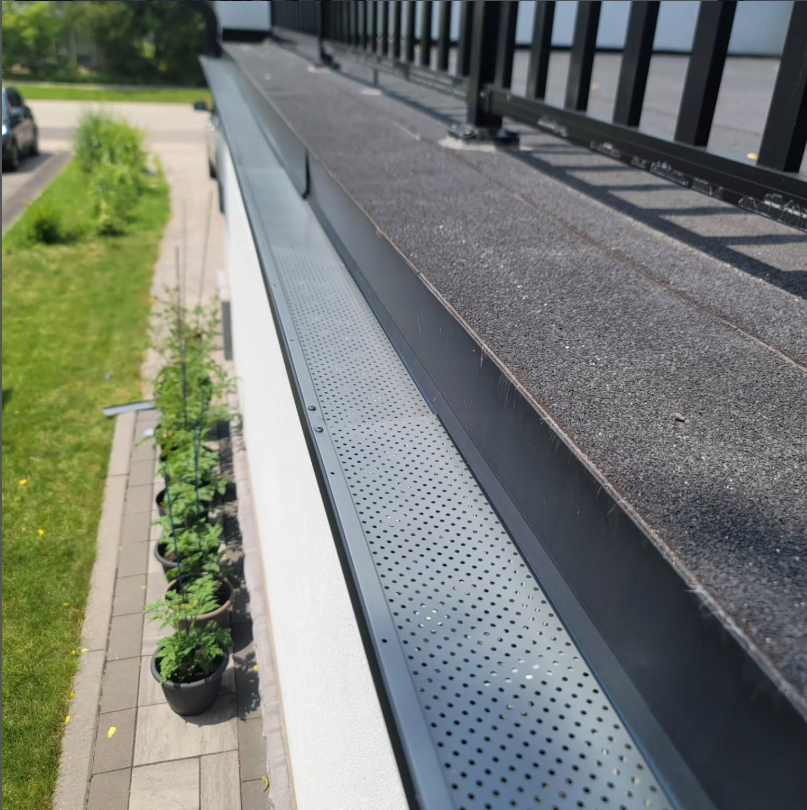
From a Kubura Siding Project
This Kubura project used an aftermarket leaf guard installed over an existing eavestrough. Our project experience reinforces an important point for homeowners: leaf guards are not a one-size-fits-all product. Roof pitch, shingle overhang and the speed and direction of roof runoff can affect whether a particular system is suitable for the home.
Retrofit Gutter Protection vs. a New Gutter System
Some gutter-protection products are designed specifically for existing eavestroughs. For example, Alu-Rex describes its Gutter Clean System as a retrofit product that is professionally installed over existing gutters to help keep leaves and debris from entering and clogging the system.
That distinction matters. If an existing eavestrough is still in good condition, adding appropriate protection may be an option. If the gutter itself is failing, sagging or extensively damaged, installing a guard over it does not resolve the underlying condition.
Kubura Siding provides eavestrough and gutter guard services for homeowners considering gutter protection or a new eavestrough system.
What Do Alu-Rex Gutter-Protection Tests Show?
Manufacturer performance data can provide useful context, but it should be read as product-specific testing rather than a guarantee of how every gutter will perform on every home.
According to Alu-Rex's published independent testing , its tested T-Rex and Gutter Clean systems produced the following drainage results under the specified test conditions:
| Perforation Blockage | Tested Drainage | What the Test Shows |
|---|---|---|
| 0% | 755 mm/hour | Published drainage result with no tested blockage |
| 50% | 537 mm/hour | Published drainage result with half of the tested perforations blocked |
| 80% | 321 mm/hour | Published drainage result with most tested perforations blocked |
Source: Alu-Rex independent product testing. Results apply to the products and test conditions described by the manufacturer and should not be interpreted as a performance guarantee for every roof or installation.
Continuous Fastening vs. Traditional Spaced Hangers
Alu-Rex also publishes strength testing comparing its T-Rex continuous fastening system with traditional spaced spikes and hangers. The test measured the applied weight required to produce one inch of gutter distortion.
| Fastener Spacing | Traditional Installation | T-Rex Continuous System |
|---|---|---|
| 8 inches | 170 lb | 250 lb |
| 16 inches | 155 lb | 232 lb |
| 24 inches | 140 lb | 214 lb |
At the 24-inch spacing used in the published comparison, the traditional installation reached the specified one-inch distortion at 140 lb, compared with 214 lb for the T-Rex continuous system — approximately 53% more applied weight in that particular test.
These figures are manufacturer-published test results for the compared fastening systems. Actual performance depends on the gutter, installation, building conditions and other factors.
What About Leaves and Needles Sitting on Top?
The same Alu-Rex test results include wind testing for debris placed on the protection surface. Under the specified test setup, dried leaves required negligible wind to move, while 200 fir needles were moved at 8 km/h and both 20 wet leaves and 100 pine needles were moved at 10 km/h.
These results help explain how the tested surface is intended to shed debris, but they should not be interpreted to mean that every roof will automatically clear itself at those exact wind speeds. Roof geometry, moisture, surrounding trees and installation conditions vary from home to home.
6. Do Gutter Guards Cause Ice Buildup?
Seeing icicles or ice near a gutter guard does not by itself establish that the guard caused the problem. Ice formation along a roof edge can be related to heat loss, attic insulation, ventilation and the way melting snow moves across the roof.
In its guidance on ice buildup in rain gutters , Alu-Rex identifies inadequate insulation and ventilation as important causes of roof-edge ice formation and notes that a leaf guard itself should not automatically be considered the cause.
Homeowner Takeaway
Gutter protection can help manage debris, but recurring winter ice deserves a broader diagnosis. The gutter, roof edge, soffit ventilation and attic conditions may all need to be considered before deciding on the right corrective action.
Considering Gutter Protection Before Winter?
The right gutter guard depends on the existing eavestrough and the conditions at the roofline. Kubura Siding can assess whether gutter protection, repair or a new eavestrough system is the better fit for your home.
7. What About De-Icing Cables?
De-icing cables can be part of a winter roof-water-management strategy in certain situations, particularly where a home has experienced recurring ice buildup along specific roof edges or drainage areas. However, they should not automatically be treated as the solution to every ice-dam problem.
If recurring ice is related to heat escaping through the roof, inadequate insulation or ventilation may also need to be investigated. The goal is to understand why the ice is forming rather than simply addressing what is visible at the eavestrough.
From Kubura's Project Experience
Kubura Siding has completed exterior maintenance work combining new gutters, leaf protection and de-icing cables where winter ice buildup was an ongoing concern. The appropriate combination depends on the home's roofline, drainage system and the conditions contributing to the problem.
8. Fall vs. Winter Eavestrough Maintenance
Fall and winter maintenance have different priorities. Fall is generally the better opportunity for preventative work because debris can be removed and visible defects can be identified before snow, ice and freezing temperatures complicate access.
| Fall Maintenance | Winter Monitoring |
|---|---|
| Remove leaves and loose debris | Watch for unusual overflow during thawing conditions |
| Check downspouts for blockage | Observe recurring icicles or roof-edge ice |
| Test water flow and drainage | Look for visible movement, sagging or damage |
| Inspect joints, corners and end caps | Monitor areas where drainage problems were previously noticed |
| Check gutter alignment and fastening | Avoid unsafe DIY work on icy roofs or ladders |
| Inspect fascia and surrounding roofline | Arrange professional assessment when winter conditions make access unsafe |
| Complete necessary repair or replacement | Plan corrective work if recurring problems become apparent |
Fall Maintenance Checklist
- Remove visible leaves, twigs and accumulated debris.
- Check that downspout openings are clear.
- Confirm water moves through the gutter instead of remaining in low spots.
- Look for leaking joints, corners and end caps.
- Check for loose, sagging or separated sections.
- Inspect the fascia where the eavestrough is attached.
- Check where each downspout discharges.
- Consider gutter protection if recurring debris is an ongoing problem.
- Address significant repairs before winter where practical.
9. When Should Eavestroughs Be Replaced?
Eavestrough replacement usually makes more sense when problems extend beyond an isolated joint or small damaged area. The decision should be based on the overall condition and performance of the system rather than its age alone.
Multiple leaking areas, extensive physical damage, persistent sagging, sections pulling away from the roofline or a system that repeatedly fails to drain properly can all justify a closer look at replacement.
Signs It May Be Time to Consider Replacement
| What You See | Why It Matters | What to Consider |
|---|---|---|
| Multiple leaking areas | Repeated localized failures may indicate broader deterioration | Compare ongoing repairs with replacement |
| Persistent sagging | Water may not move correctly toward the downspouts | Inspect alignment, fastening and system condition |
| Gutter pulling away | Fastening points or the fascia may be compromised | Inspect both the gutter and supporting roofline |
| Extensive physical damage | Several damaged areas can reduce reliable drainage | Assess whether replacement is more practical |
| Recurring drainage problems | The existing configuration may not be performing as intended | Assess the complete gutter and downspout system |
Real Project: Gutter & Downspout Replacement in Woodbridge
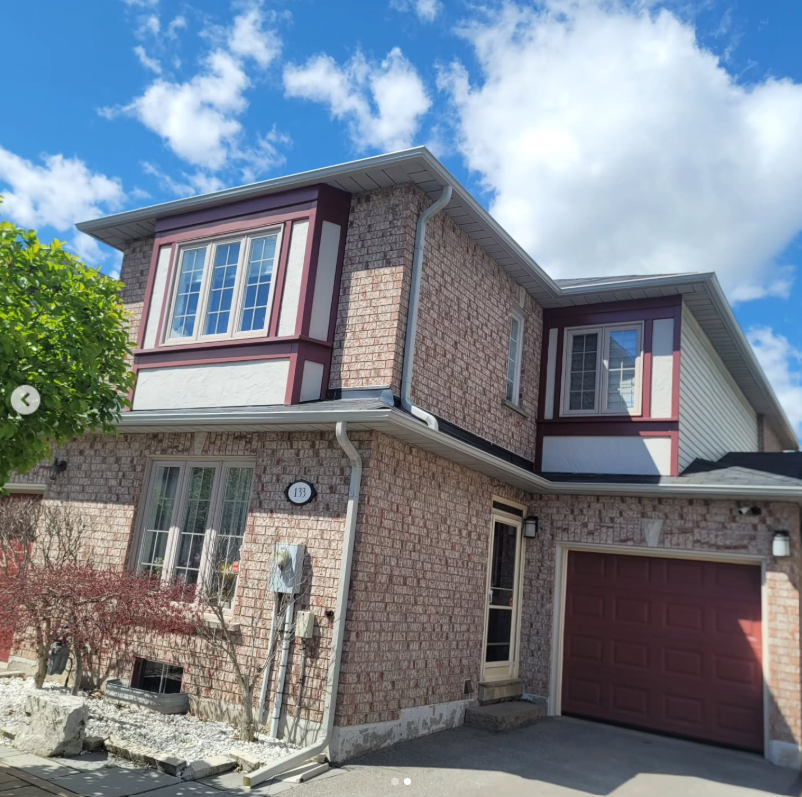
Real projects are a useful reminder that not every eavestrough problem ends with cleaning or a small repair. At this townhouse complex in Woodbridge, Kubura Siding completed a full gutter and downspout replacement.
Project Takeaway
This Woodbridge project is an example of a situation where the scope extended to the complete gutter and downspout system rather than a localized maintenance item. The right decision for another home may be different, which is why the existing system should be assessed before deciding between cleaning, repair, gutter protection and replacement.
10. When Should You Call a Professional?
Some maintenance can be visually assessed from the ground, but homeowners should avoid taking unnecessary risks on ladders, roofs or icy surfaces. A professional assessment becomes more useful when the problem is difficult to locate, the system is high or difficult to access, physical damage is visible, or the same issue keeps returning.
Professional inspection is particularly worth considering when an eavestrough is pulling away from the roofline, several sections are leaking, fascia damage is visible, drainage problems continue after debris is removed, or replacement and gutter protection are being considered together.
Get Your Eavestrough System Ready for Fall & Winter
If your eavestroughs are leaking, sagging, repeatedly clogging or no longer draining properly, Kubura Siding can help assess the system and determine whether repair, gutter protection or replacement is the appropriate next step.
Eavestrough Installation, Repair & Gutter Protection Across the GTA
Fall maintenance can reveal problems that are difficult to ignore once winter arrives. If cleaning and basic maintenance uncover leaking joints, sagging sections, damaged fascia, recurring drainage problems or a deteriorated gutter system, the next step is to determine whether repair, gutter protection or replacement makes the most sense.
Kubura Siding provides eavestrough installation, repair and gutter-protection solutions across Toronto and surrounding GTA communities. Homeowners can learn more about our eavestrough services in Toronto, eavestrough services in Mississauga, eavestrough services in Oakville, eavestrough services in Burlington and eavestrough services in Hamilton.
You can also browse completed exterior projects to see examples of Kubura Siding's work.
Frequently Asked Questions
When should I clean my eavestroughs before winter in Toronto?
Fall is an important time to check eavestroughs after leaves and debris begin accumulating and before freezing conditions make maintenance more difficult. Homes surrounded by trees may require more frequent checks because debris can return after an earlier cleaning.
How do I know if my eavestrough is clogged?
Common warning signs include water overflowing during rain, standing water inside the gutter, visible debris around the downspout opening and water backing up instead of draining through the downspout. If the problem continues after visible debris is removed, the system may need further inspection.
Should I repair or replace a leaking eavestrough?
A localized leak does not automatically require full replacement. An isolated joint, corner or damaged section may be repairable. Replacement becomes more worth considering when there are multiple leaks, widespread deterioration, persistent sagging or recurring performance problems across the system.
Are gutter guards worth it for Toronto homes?
Gutter guards can be useful for homes that repeatedly collect leaves, needles and other debris, but suitability depends on the existing eavestrough and roof conditions. Roof pitch, shingle overhang, water flow and surrounding trees can all influence which type of gutter protection is appropriate.
Can gutter guards be installed on existing eavestroughs?
Some systems are specifically designed for retrofit installation over existing gutters. For example, Alu-Rex Gutter Clean is designed to be installed over existing eavestroughs. The existing gutter should still be assessed first because gutter protection does not correct a failing or badly damaged system.
Do gutter guards prevent ice dams?
Gutter guards are primarily intended to manage debris, not correct every cause of ice dams. Repeated roof-edge ice can also be associated with heat loss, attic insulation, ventilation and other roof conditions. The underlying cause should be investigated rather than assuming the gutter guard itself will solve the problem.
Can clogged eavestroughs cause problems during winter?
Yes. Debris can restrict drainage and prevent rain or melting snow from moving freely toward the downspouts. Keeping the system clear before winter helps the eavestrough perform its intended drainage function, although recurring roof-edge ice can involve factors beyond the gutter itself.
Can I inspect my eavestroughs myself?
Many warning signs can be observed from the ground, including overflow, sagging, disconnected downspouts and sections pulling away from the roofline. Homeowners should avoid unsafe ladder or roof work, particularly when surfaces are wet, snowy or icy. Difficult-to-access or damaged systems are better assessed professionally.
Fall & Winter Eavestrough Maintenance: Final Takeaway
For most Toronto homeowners, fall eavestrough preparation comes down to four decisions: keep the system clear, repair localized problems, add appropriate gutter protection where recurring debris makes it useful, and replace the system when deterioration or performance problems are widespread.
Downspouts and fascia should be considered part of the same roof-water-management picture. If an eavestrough repeatedly overflows, sags, leaks or pulls away from the roofline, correcting the underlying problem before winter is more useful than simply treating the visible symptom.
Gutter guards can reduce debris entering the system, but they are not a universal solution for every roof and they should not be presented as a cure for every ice-dam problem. The condition of the eavestrough, roofline and surrounding building components should guide the decision.
About the Author & Kubura Siding
Marko Kuburovic shares practical exterior-renovation guidance based on Kubura Siding's project experience across Toronto and the GTA. Kubura Siding works on eavestrough and gutter-protection systems as well as siding, soffit, fascia and related exterior projects.
This guide incorporates observations from Kubura Siding's own gutter and leaf-guard projects together with product-specific technical information from manufacturer sources where applicable.
Kubura Siding also has an official installer profile in the Alu-Rex directory . For examples of completed work, visit our project portfolio.
Need Help With Your Eavestroughs Before Winter?
Whether you're dealing with damaged eavestroughs, recurring debris, drainage problems or considering gutter protection or replacement, Kubura Siding can help you determine the appropriate next step for your home.
Editorial note: This guide provides general homeowner information about seasonal eavestrough maintenance and exterior drainage. Individual homes and roof systems vary, and specific repair or installation recommendations should be based on the conditions observed at the property.
